Wu Changshuo
Introduction
Wu Changshuo (1844-1927) was a prominent Chinese artist renowned for his mastery in poetry, calligraphy, painting, and seal carving. Born in Anji county, Huzhou, Zhejiang province, Wu is widely celebrated as a leading figure of the Shanghai School of Art, or Haipai, which emerged in the early 20th century. His works are characterized by a unique blend of classical techniques and innovative approaches, earning him a lasting legacy in modern Chinese art history. Wu's artistic achievements have been showcased in numerous exhibitions, including major retrospectives at institutions such as the Palace Museum in Beijing and the China Art Museum in Shanghai.
Early Life
Wu Changshuo was born in 1844 in Anji county, Zhejiang province, during the late Qing Dynasty. His early exposure to art came through his father, who introduced him to seal engraving at the age of 14. Wu's passion for this art form was evident as he dedicated himself to learning and practicing seal carving daily throughout his life. As a young man, Wu traveled extensively in the Yangtze Delta region, where he immersed himself in the study of calligraphy and seal engraving while building connections with fellow artists and intellectuals. These formative experiences laid the foundation for his later achievements in painting and calligraphy.
Artistic Career
Painting Style
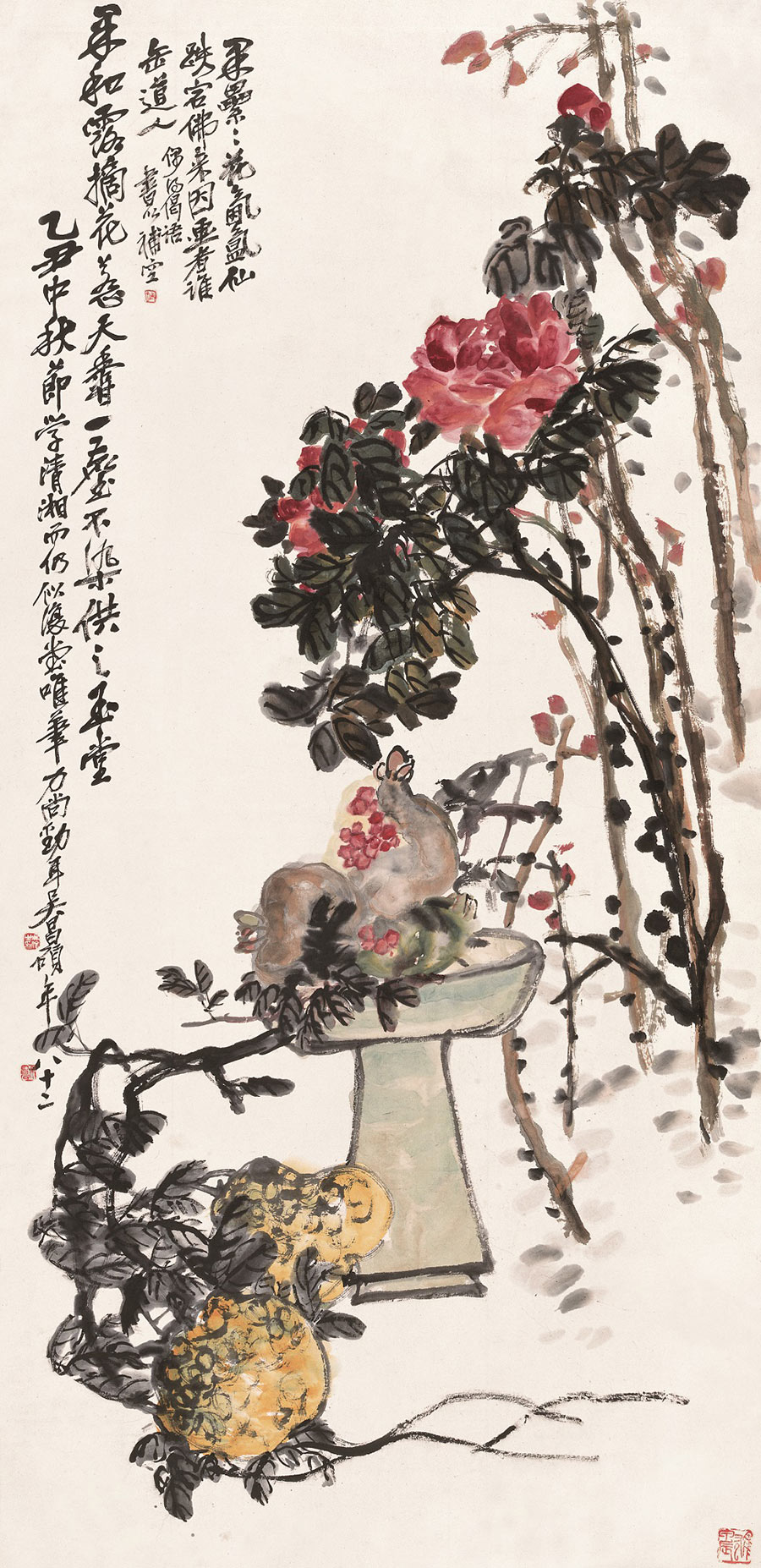
Wu Changshuo's painting style is distinguished by its integration of classical calligraphic strokes and traditional techniques, fused with refined literati aesthetics. His works often depict auspicious flowers, such as plum blossoms, orchids, peonies, and wisterias, each symbolizing different spirits and values. Wu's paintings are celebrated for their bold, sharp, and magnificent compositions, which reflect his philosophical thinking and appreciation for life. His innovative approach brought a new vitality to Chinese ink art, influencing generations of artists and reshaping the flower-and-bird genre.
Calligraphy
Wu Changshuo was an accomplished calligrapher whose works drew inspiration from ancient inscriptions on rock drums, bronze cauldrons, and steles from the Han and Jin dynasties. His calligraphy is characterized by its forceful and dynamic strokes, which convey a sense of righteousness and inner strength. Wu's ability to incorporate calligraphic techniques into his paintings added depth and complexity to his artistic creations, further solidifying his reputation as a master of multiple disciplines.
Seal Carving
Seal carving was a lifelong pursuit for Wu Changshuo, beginning at the age of 14 under his father's guidance. He became a leading figure in this art form, known for his meticulous craftsmanship and innovative designs. Wu played a pivotal role in the establishment of the Xiling Seal Society, serving as its founding director and contributing to the development of seal carving as a respected art form. His seals are admired for their intricate details and artistic expression, reflecting his deep understanding of traditional Chinese culture.
Influence and Legacy
Wu Changshuo's contributions to Chinese art extend beyond his individual works. As a leading figure in the Shanghai School of Art, he played a significant role in shaping the city's artistic community during a period of cultural flourishing. Wu's influence can be seen in the works of his students and contemporaries, including Pan Tianshou, Liu Haisu, Qi Baishi, and Mei Lanfang, many of whom became cultural pillars of modern China. His innovative approach to painting, calligraphy, and seal carving continues to inspire artists and scholars, ensuring his enduring impact on Chinese art history.
Notable Works
Wu Changshuo's oeuvre includes a wide range of paintings, calligraphy, and seal carvings, many of which are considered masterpieces. Notable works include his painting of peony blossoms created during his stay in Shanghai's Pudong area, and his lychee fan painting featuring the Feizixiao species of the fruit. His scroll paintings, such as "A Peach Banquet with an Alcohol Jar" and "Precious Fruits," showcase his ability to blend traditional folklore with literati philosophical thinking. These works, along with others, are celebrated for their vibrant colors, intricate details, and symbolic meanings.








